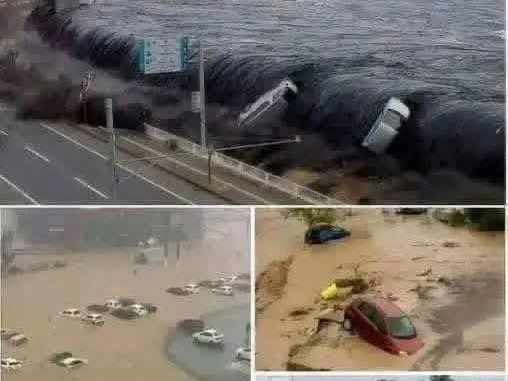
A powerful 8.2-magnitude earthquake struck the Alaskan Peninsula late Wednesday, immediately drawing attention from monitoring agencies and coastal communities across the Pacific. The quake, occurring at a depth of about 35 kilometers, was centered roughly 91 kilometers east-southeast of Perryville—a region known for seismic activity, though rarely for an event of this scale.
The impact was felt almost instantly.
Emergency systems were activated within minutes. Tsunami warnings were issued, sirens sounded in vulnerable coastal areas, and authorities began coordinating rapid response efforts. Although early reports indicated no immediate casualties or major damage, the sheer magnitude of the quake prompted widespread caution.
In places like Kodiak, residents reported hearing tsunami sirens shortly after the tremor. Footage from the area captured the urgency, with alarms echoing as people quickly followed safety procedures. The swift response highlighted how seriously such events are treated, even before their full impact is known.
The U.S. National Tsunami Warning Center issued alerts covering a large portion of southern Alaska, including coastal zones from Hinchinbrook Entrance to Unimak Pass. These warnings are designed to provide early notice of potential wave activity, giving communities valuable time to react.
Monitoring efforts quickly expanded beyond Alaska.
The Pacific Tsunami Warning Center began analyzing whether the quake could generate waves affecting distant regions. Initial advisories were issued for areas such as Hawaii and Guam, where residents were briefly placed on alert.
Within a few hours, those locations were declared safe.
Even so, the situation remained fluid. Tsunami threats can evolve depending on factors like underwater displacement and ocean depth, so monitoring continued even after initial warnings were eased.
Mike Dunleavy confirmed that Alaska’s emergency operations center was activated immediately after the quake, ensuring coordination between local, state, and federal agencies.
The region’s preparedness is no coincidence.
Alaska lies along the Pacific Ring of Fire, an area known for intense seismic activity. While earthquakes are common there, those exceeding magnitude 8.0 are rare and demand heightened attention.
International agencies also responded quickly.
Countries like Japan and New Zealand initiated their own assessments, reflecting the global nature of tsunami risk—where a single event can have consequences across entire ocean basins.
According to the United States Geological Survey, the main quake was followed by several aftershocks, including at least eight smaller tremors, two of which exceeded magnitude 6.0. These aftershocks are a natural part of the Earth’s adjustment process but can still pose risks, especially in already weakened areas.
For residents, the hours that followed were filled with uncertainty.
Even without confirmed damage, the threat of aftershocks and possible delayed tsunami effects kept communities on alert. Authorities urged people to stay informed, follow official guidance, and avoid coastal areas as a precaution.
Clear communication played a crucial role.
Emergency alerts and official updates helped provide clarity, ensuring people had accurate information and reducing the risk of panic.
Despite the quake’s intensity, the absence of immediate reports of casualties or widespread destruction brought some relief. Still, officials emphasized that assessments were ongoing, particularly in remote areas where conditions can take longer to evaluate.
Response teams continued their work, checking affected regions and gathering data to fully understand the impact.
Beyond the immediate situation, the earthquake serves as a reminder of the planet’s dynamic nature. Events like this highlight the importance of preparedness, monitoring systems, and international cooperation in managing natural disasters.
In Alaska, such systems are well developed—from early warning networks to evacuation protocols and public awareness efforts—all aimed at minimizing risk.
Yet events of this magnitude still put those systems to the test.
They expose vulnerabilities, challenge readiness, and reinforce the need for constant vigilance.
For now, conditions remain stable.
Tsunami warnings have been adjusted as more information becomes available, and no major damage has been confirmed. However, monitoring continues, and authorities remain ready to respond if needed.
The earthquake underscores how quickly situations can change—and how vital it is to act with speed, coordination, and precision.
As the region gradually returns to calm, the focus remains on staying alert and prepared.
Because even after the shaking stops, the effects of such a powerful event continue to unfold—in the response, the recovery, and the lessons learned for the future.