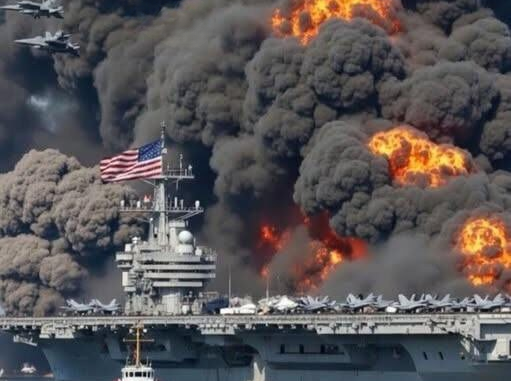
Many modern crises today seem to ignite not through confirmed facts, but through a surge of urgent claims spreading faster than anyone can verify.
Across social media, posts began circulating about a supposed military strike involving a heavily guarded vessel. The messages were dramatic, immediate, and confident. Screens flooded with warnings, speculation, and bold declarations that something major had just occurred.
Within minutes, thousands shared the story. Within hours, it had reached a global audience.
But there was a major problem: no verification.
No official statements, no confirmed reports, no acknowledgment from governments, defense authorities, or international monitoring organizations. Yet, the story kept growing.
This is how information spreads today: first comes the rumor, then comes the verification—if it ever arrives.
Institutions that would normally confirm or deny such events remained silent. Defense ministries, military spokespeople, and international organizations made no statements supporting the claim. Experts like the World Health Organization and UNESCO have long warned that unverified information often fills these gaps before facts can catch up.
Silence matters.
In matters of national security and military operations, information is released carefully, following strict verification procedures. When these channels are quiet, it usually signals one thing: the story isn’t confirmed.
In the absence of facts, speculation takes over. Moments of uncertainty become fertile ground for rumors. People crave answers, especially when the subject involves conflict or global stakes. Without immediate clarity, assumptions, exaggerations, and misinformation fill the void.
Research consistently shows that breaking news is particularly vulnerable. Early reports, often incomplete, spread rapidly, gaining credibility simply through repetition. That’s how a rumor can evolve into a perceived narrative.
Several factors make this almost inevitable:
- Public interest: Military activity and international conflict naturally attract attention.
- Lack of early data: Initial reports are fragmented, making even accurate details easy to misinterpret.
- Unofficial sources: Anonymous accounts or commentators presenting speculation as fact amplify uncertainty.
- Algorithms: Social media platforms prioritize engagement. Content that sparks fear or urgency spreads faster than verified information—sometimes much faster.
The real danger emerges when such misinformation has real-world consequences. False claims about military events can heighten tensions, affect markets, trigger panic, and strain diplomatic relationships. Even the perception of an attack can ripple far beyond the original post.
Verification is crucial. Organizations like NATO follow strict procedures: cross-referencing data, consulting multiple sources, evaluating security implications, and coordinating with allies before confirming anything. This process takes time, and in a world craving instant answers, the delay can feel frustrating—but it’s necessary. Accuracy is not optional when the stakes are this high.
Without confirmed information, even experts cannot provide reliable analysis. Geopolitical and defense specialists rely on evidence, not assumptions. Institutions such as the International Institute for Strategic Studies and the Stockholm International Peace Research Institute base conclusions on verified data, not speculation. When evidence is absent, responsible experts acknowledge uncertainty.
Speculating without facts creates noise, not insight. It gives the illusion of understanding while offering no foundation. Advanced military technologies—stealth systems, missile defenses, cyber operations—cannot be accurately assessed without verified details.
This underscores one overlooked skill today: patience. In a culture of instant updates, waiting for confirmation feels slow. But early reports are often incomplete or inaccurate. Narratives evolve; details clarify over time. The first version of a story is rarely the final one.
In the case of the alleged military attack, no credible confirmation exists. No official reports, no verified evidence, no acknowledgment from authoritative sources. Until that changes, the story remains unverified—and should be treated as such.
Moving forward, clear indicators to watch include: official press releases from defense agencies, government or alliance statements, reporting from established media, and independent confirmation from multiple credible sources. Until these appear, any other claims remain speculation—not truth.
The bigger issue goes beyond a single event. It reflects how information spreads in today’s ecosystem. Every share, comment, and reaction amplifies stories. Choosing not to circulate unverified claims is an active and responsible choice. Accuracy depends not only on reporters but on consumers.
In a world dominated by speed, clarity is a conscious decision. Choosing accuracy over assumption isn’t just important—it’s essential.