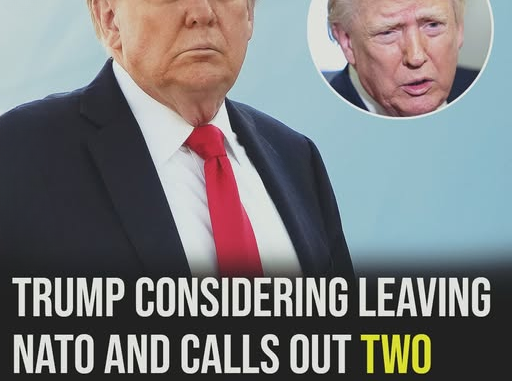
Recent remarks by Donald Trump have once again put NATO under intense global scrutiny. In an interview, Trump said he is “seriously considering” withdrawing the United States from the alliance after the ongoing conflict involving Iran ends—comments that have raised concern among diplomats and analysts.
NATO, founded in 1949 as a collective defense pact, now includes 32 countries. Trump has long criticized the alliance, arguing that member states do not contribute enough to defense and rely too heavily on the U.S. He again described NATO as ineffective and questioned whether adversaries like Vladimir Putin truly see it as a threat.
His latest criticism is tied to disagreements with European allies over the Iran conflict. Several countries, including the United Kingdom and France, have declined to support U.S. military efforts or allow use of their bases, particularly regarding operations linked to the Strait of Hormuz—a vital route for global oil supplies.
Trump has openly criticized these allies, accusing them of failing to cooperate and even questioning their military capabilities. European leaders, however, say their decisions are based on legal limits and concerns about escalating the conflict, not a lack of support.
The situation has been further complicated by rising global energy prices and tensions tied to disruptions in the Strait of Hormuz. While Trump has suggested the conflict may be nearing its end, instability remains.
Despite his statements, U.S. law requires Congressional approval for any withdrawal from NATO, making such a move unlikely in the short term. Still, experts warn that even discussing an exit could weaken the alliance’s unity and deterrence.
Some analysts believe Trump’s comments are meant to pressure allies into increasing defense contributions, while others fear they could deepen divisions within the alliance. European nations are already exploring independent diplomatic approaches to the crisis, signaling a growing gap with Washington.
In the U.S., lawmakers from both parties continue to emphasize NATO’s importance, arguing it remains a cornerstone of global security. However, Trump’s remarks have reignited debate about the alliance’s future and whether it can adapt to shifting geopolitical realities.
For now, NATO remains intact—but the conversation around its role, relevance, and unity has clearly intensified.