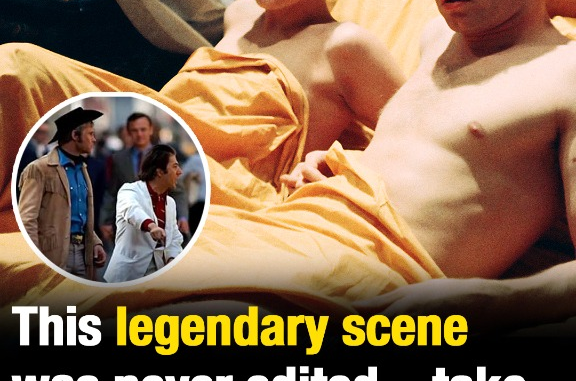
Few performances feel as fully inhabited as Dustin Hoffman’s portrayal of Ratso Rizzo in Midnight Cowboy. From the character’s distinctive limp—created by placing a stone in his shoe—to the strained cough and frail body language, Hoffman crafted a figure who seems to be physically deteriorating before the audience’s eyes. This dedication gives Ratso an authenticity that continues to shape the film’s emotional impact.
Even within such a meticulous performance, some viewers have noticed brief details in the final scenes that appear slightly unusual. During the closing moments on the bus, when Joe Buck, played by Jon Voight, realizes Ratso has died, a few observers claim to see subtle signs of movement—such as a faint shift or a barely noticeable motion as Joe reacts. These tiny details are easy to miss but have sparked discussion among attentive fans.
Opinions about these moments vary. Some interpret them as simple continuity quirks or natural imperfections in filmmaking, the kind that can occur even in carefully produced scenes. Others suggest they add a layer of ambiguity, making the moment feel less fixed and more emotionally complex, as if blurring the boundary between life and death.
Regardless of interpretation, the scene’s emotional power remains strong. Rather than diminishing the film, these subtle irregularities can make it feel even more immediate and human. Midnight Cowboy endures not because it is perfect, but because its imperfections contribute to its lasting emotional resonance.