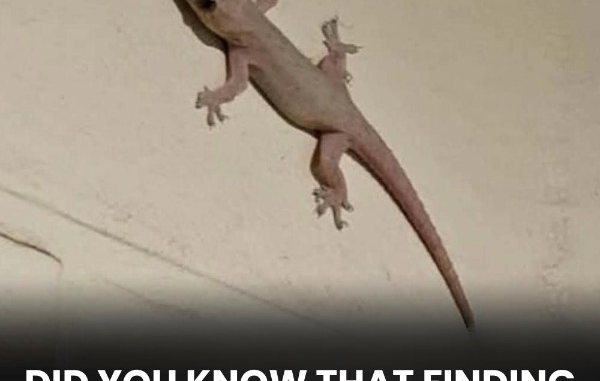
Seeing a lizard in your home may seem like a small, everyday event—especially in warm climates where these reptiles are common. They often move quietly along walls or ceilings, appearing for a moment before disappearing again. However, in many parts of the world, such encounters are seen as more than just ordinary. Across various cultures, lizards are associated with symbolic meanings, turning a simple sighting into something more significant.
Understanding this idea becomes clearer when looking at cultural perspectives. In several Asian countries, including Vietnam and Thailand, house lizards are often viewed positively. Aside from helping control insects, they are sometimes considered quiet guardians of the home, contributing to balance and protection. In Thailand, even the call of a gecko can carry meaning, occasionally interpreted as a signal to move forward with confidence—or to stop and think more carefully.
In India, interpretations can be even more specific. Traditional systems like Gauli Shastra assign meaning to different types of lizard encounters. Factors such as timing, direction, and where the lizard appears are believed to offer clues about possible future events. Although these ideas are based on tradition rather than scientific evidence, they still influence how many people interpret such moments.
In the end, what it means to see a lizard indoors depends largely on personal perspective. For some, it’s simply a harmless animal doing its part in the ecosystem. For others, it can serve as a gentle prompt to reflect, stay mindful, or recognize the influence of cultural beliefs in daily life. Whether viewed in a practical or symbolic way, the experience often invites a brief pause—and sometimes, that pause gives rise to meaning.