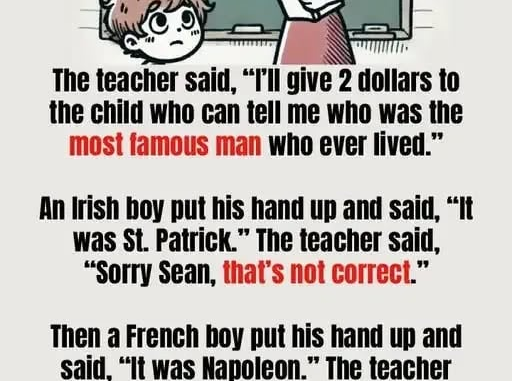
The story of a young boy who chooses a two-dollar bill over a religious symbol is often treated as a simple joke, yet beneath its humor lies a deeper reflection on human nature. It quietly exposes how easily our principles can shift when something tangible and immediate is placed in front of us. What seems like innocence is really a glimpse into a broader truth: people often compromise their values for far less than they believe they would. This isn’t just a childhood moment—it reflects a pattern that continues into adulthood.
A similar idea appears in the story of a poor man who proposes marriage to a wealthy woman and is rejected. Instead of grieving the loss of a relationship, he focuses on the imagined wealth he never gained. In doing so, love is reduced from an emotional bond to a financial calculation. Rejection becomes less about personal loss and more about missed opportunity, revealing how easily even deep human connections can be reframed as transactions.
Another example is Stanley, who is offered a supposedly magical desk for a high price. Rather than being drawn in by the promise of transformation, he fixates on whether the cost is justified. His skepticism reflects a modern mindset that demands measurable value before believing in possibility. In a world where everything is evaluated in terms of profit or return, even wonder must prove its worth.
Together, these stories highlight a recurring theme: beneath our ideals, we are constantly measuring value. Whether it is faith, love, or ambition, everything is quietly weighed against personal gain. We often believe our principles are unshakable, yet everyday choices suggest otherwise. The boy in the story is not portrayed as immoral, but practical—choosing immediate benefit over abstract belief.
This quiet calculation extends into adult life in subtle ways. People accept jobs that don’t fulfill them because the financial rewards are stronger. They stay in unhealthy relationships because leaving feels too costly socially or emotionally. Over time, small compromises accumulate, shaping identity in ways we barely notice.
In the end, these narratives force us to examine what remains after the exchange is made. Once the benefit is gone, what is left of the values we traded? Perhaps the true measure of worth is not what we gain, but what we manage to keep unbought. These stories do not accuse us—they simply reveal how often we confuse price with value, and remind us that some things lose their meaning the moment they are treated as something that can be sold.