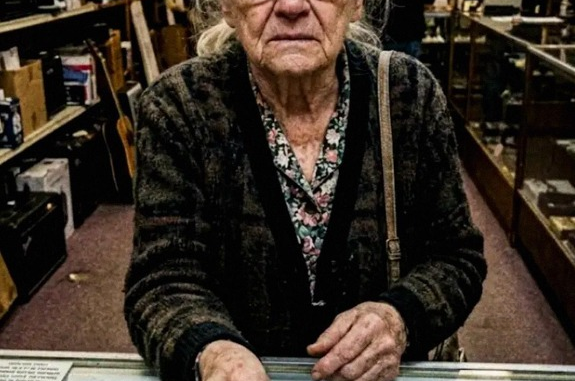
I work at a pawn shop on the edge of town, a place filled with the quiet weight of people letting go of things they once thought they’d keep forever. Most days are routine—customers avoid eye contact while I examine their belongings, and I keep things professional. But a few days ago, everything changed when an elderly woman walked in.
She looked fragile, yet carried herself with quiet dignity. Without much hesitation, she placed a simple gold wedding band on the counter. It was worn smooth from years of use, the kind of ring that clearly held a lifetime of memories. When I gently asked if she was sure, she admitted she needed money to pay her overdue electric bill or her house would go dark.
As I inspected the ring under the light, I noticed a faint engraving inside: “O and E — Always. 1968.”
My heart skipped. Suddenly, I was a kid again, remembering my grandfather Oscar—his notebooks, his quiet life, and the mysterious “E” he wrote about but never explained. He never married, and now I realized why.
I asked the woman her name. She said “Eden.” When I mentioned Oscar, her face went pale. She hadn’t seen him since 1968 and believed he had abandoned her. But I knew my grandfather better than that.
I rushed home and found a box of letters he had written to “E,” never sent but carefully kept. Back at the shop, I showed them to her. They told the story of a man who had searched for her, returned to where they met, even tried to find her in the city—only to be misled. His final letter made it clear: he never stopped trying.
Eden read them in tears, realizing they had both lived decades believing the wrong story—that each had been left behind.
But reality still remained—she had no money and no power at home. I called the utility company and managed to get her an extension. Even my boss quietly chipped in. I covered the rest and handed her back the ring, telling her to keep it.
Later, I drove her to my grandfather’s grave. Standing there, she finally faced the truth she’d been denied for over fifty years. She spoke softly, as if finishing a conversation that had been paused for a lifetime.
On the way back, something had shifted. The pain was still there, but so was peace. She asked if he ever talked about her. I told her he didn’t say her name—but he never forgot her.
Before leaving, she invited me over for tea, saying my grandfather wouldn’t want our story to end at a pawn shop counter. She had spent years believing she was abandoned, but now she understood—she had been loved all along.