For twelve years, I poured everything into my company — long hours, weekends, constant responsibility. I trained new employees, saved failing projects, and kept the place running without ever asking for more. Loyalty was simply how I worked.
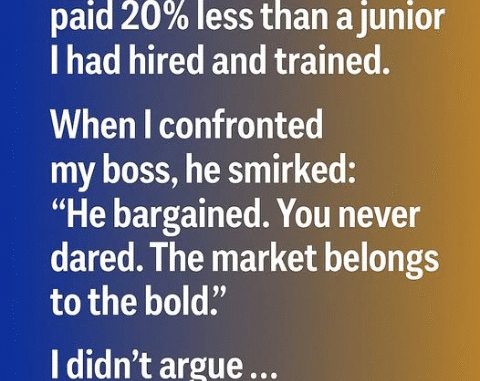
Then one day, I learned a junior employee I had hired was earning 20% more than me. No mistake, no hidden bonus — just the truth. I confronted my boss, and he shrugged it off with a smirk: “He negotiated. You didn’t. The market rewards boldness.”
That moment made twelve years of dedication feel invisible.
That night, I realized I had allowed myself to be taken for granted. So the next morning, I wrote my resignation — polite, clear, and final — along with a detailed handover. When I placed it on my boss’s desk, his smugness vanished. He panicked, suddenly aware of how much I quietly held together.
He offered raises, titles, promises — but it was too late. It wasn’t about money anymore; it was about respect.
My coworkers were shocked, many saying I’d been the glue of the team. And in leaving, I finally understood something: loyalty often goes unnoticed until the person offering it walks away.
At my new job, I was valued from day one. They saw not just my skills, but my leadership and integrity. My salary was higher, but the real difference was simple — I was respected.
That experience taught me this: being quiet doesn’t mean accepting disrespect. Humility doesn’t mean letting others undervalue you. Sometimes the strongest statement you can make is to leave without anger, just certainty.
Loyalty without acknowledgment becomes self-betrayal.
Your worth doesn’t decrease because someone else fails to see it. And sometimes, the most powerful voice you have is the one that speaks by walking away.