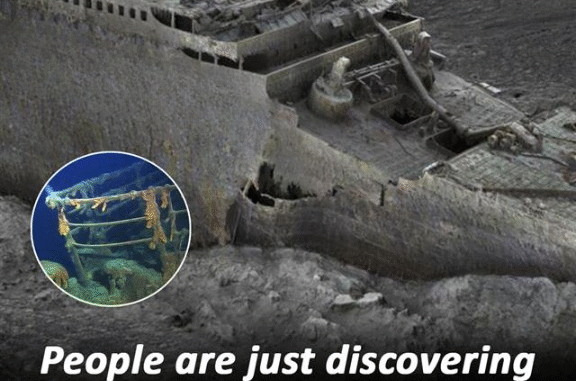
The reality of the Titanic’s victims is far bleaker than the common images of frozen bodies drifting in the Atlantic or resting intact on the seabed. The deep ocean doesn’t preserve human remains—not at 12,000 feet, in total darkness, where water is cold enough to stop a heart instantly. Over 1,500 people went down that night. Clothes survived. Shoes survived. The ship’s steel survived. But the people themselves did not—and science explains why.
Once the Titanic settled on the ocean floor, any bodies that sank with it began to decompose immediately. At the surface, some corpses floated and were recovered, but at extreme depths, nature takes over. Bacteria break down soft tissue, while deep-sea scavengers—crabs, amphipods, and others—consume what remains. Death becomes nourishment, a quiet recycling essential to life in the deep sea.
Even bones don’t survive. Below a certain depth, the water dissolves calcium carbonate, which human skeletons are made of. The Titanic rests far below this “calcium carbonate compensation depth,” meaning bones crumble and disappear, leaving no skeletal traces.
What remains are objects once part of lives: boots shaped as if worn, coats molded like torsos, children’s shoes lying in silt. These artifacts tell the story of people erased by pressure, time, and the sea. Early expeditions expected horror, but instead they found absence—the silence itself was unnerving.
Some find the truth tragic: the ocean claimed the victims utterly. There is no underwater cemetery, no skeletal testimony. Only the ship, slowly rusting, and the belongings of those lost. Others find solace: the dead returned to nature, becoming part of the ocean’s cycle, a quiet form of release.
Artifacts convey their own stories: a suitcase spilling letters, china still arranged, a bathtub standing upright, twisted railings, a hairbrush, spectacles, a child’s toy. These remnants are the closest link to lives lost, while the ocean absorbs and transforms everything else.
The Titanic is not a grave—it is a site of reclamation. Rusting bacteria will eventually reduce the ship to dust; in decades, only memory and stories will remain. The tragedy persists not in bodies, but in what history and human remembrance preserve: family stories, survivor accounts, and the echoes of those final moments.
The ship mirrors the lives it took: nothing remains unchanged, nothing intact, everything returning to the sea. The ocean holds no bodies, yet the world keeps the grief, the shock, and the story alive. It is memory, not skeletons, that endures.