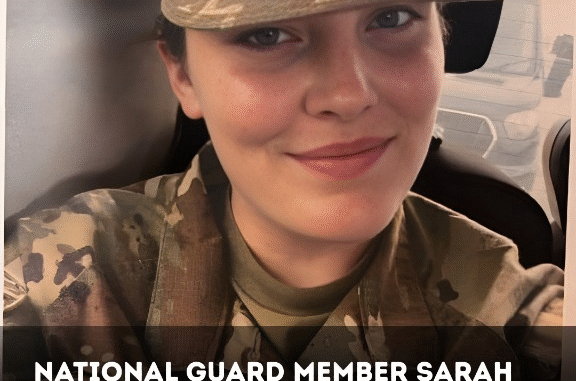
Sarah Beckstrom was only twenty, but those who served with her say she carried herself with a calm, steady sense of duty well beyond her age. As one of the youngest National Guard members assigned to help with White House security, she approached long nights and high-pressure shifts with quiet commitment, driven not by recognition but by her belief in service — a belief she’d lived since childhood.
Her assignment in Washington felt like the start of a promising future. She reassured her parents it was safe, “the last place anything would ever happen.” But that confidence shattered in an instant when gunfire erupted during her shift. The scene turned chaotic, and within moments Sarah was down. She was rushed to the hospital, but her injuries were too severe, and her family arrived only in time to say goodbye.
News of her death spread quickly, turning her life into a headline, but for those who loved her, the loss was far more personal. Her parents clung to small reminders — her jacket, her room left untouched — while her younger brother replayed their final text thread. Her fellow Guardsmen held a memorial, struggling to reconcile their training with the grief of losing someone they had expected to see at the next roll call.
In her hometown, a candlelit vigil filled the church. Teachers, neighbors, and friends gathered to remember the girl who always volunteered first, who helped without being asked, who believed wholeheartedly in serving others.
Investigators worked to piece together what happened, offering updates that did little to ease the family’s pain. No explanation could answer the question that haunted everyone who knew her: why someone who dedicated her life to helping others had her own life cut so short.
Sarah’s legacy now lives not in headlines but in the people she touched — in her kindness, her steadiness, and the purpose she carried into every day. And at her family’s table, the empty seat she leaves behind says more than any official honor ever could.