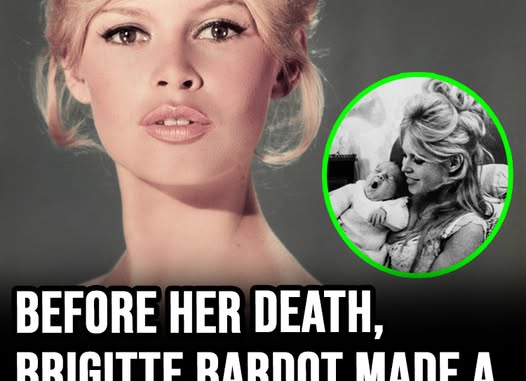
Brigitte Bardot, the legendary French actress and cultural icon of the 1950s and 1960s, has passed away at the age of 91. Her death closes a remarkable chapter in cinema, activism, and the life of a woman whose influence was as powerful as it was complex.
Bardot died peacefully on Sunday, December 29, at her longtime home, La Madrague, in Saint-Tropez. According to her foundation, her passing was not linked to any specific illness. She was surrounded by her husband of many years, Bernard d’Ormale. Her family has asked for privacy as they grieve a figure who left an indelible mark on the world.
In a tribute, the Brigitte Bardot Foundation described her as “an extraordinary woman who devoted her life to creating a world that treats animals with greater respect.” The organization pledged to continue her work with the same determination that defined Bardot’s later years and offered condolences to her loved ones and the people of Saint-Tropez.
Bardot became a global sensation as a symbol of beauty, freedom, and sensuality, particularly through films like And God Created Woman. Her image transformed the portrayal of femininity on screen and made her one of the most recognizable women of her time. Yet at just 39, after more than 50 films, she made the unexpected decision to leave acting behind.
She withdrew from fame entirely to dedicate her life to animal rights. “I gave my youth and beauty to men,” she once said. “I give my wisdom and experience to animals.” That belief guided the rest of her life, as she became one of the most outspoken—and often controversial—figures in global animal welfare through her foundation.
Behind her confidence and public influence, however, Bardot’s private life was shaped by deep personal struggles, especially her relationship with her only child.
She and actor Jacques Charrier welcomed their son, Nicolas, on January 11, 1960. Bardot later admitted that motherhood was never something she wanted. In her 1995 memoir Initiales BB, she wrote openly about her pregnancy, describing it as an experience she resented—words that shocked readers and caused lasting pain.
After her divorce, Nicolas was raised primarily by his father and grandparents. Bardot later said she felt unable to provide stability, describing herself as too lost and uprooted to be the foundation her son needed.
The memoir became a bestseller but permanently damaged their relationship, particularly after she referred to Nicolas as “the object of my misfortune.” Attempts by Charrier and Nicolas to prevent those passages from being published failed, and the book appeared unchanged.
For many years, mother and son remained estranged. Yet in her final years, Bardot seemed to acknowledge the hurt her words had caused. In a June 2024 interview with Paris Match, she revealed a promise she had made to Nicolas.
“I promised him I would never speak about him in interviews again,” she said.
It was a quiet but significant gesture—one that suggested respect, restraint, and perhaps regret. For a woman known for her blunt honesty, the promise carried deep meaning.
Brigitte Bardot leaves behind a complicated legacy: a cinematic legend, a devoted animal rights activist, and a deeply human figure shaped by contradictions, conviction, and unresolved pain. Her impact on film, culture, fashion, and activism remains profound, even as her life reminds us that fame cannot protect anyone from personal struggle.
Rest in peace, Brigitte Bardot.