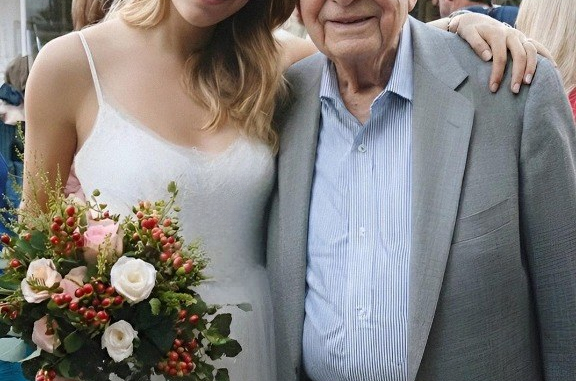
The day I married Ethan was supposed to celebrate love, family, and unity. Instead, it became a stark lesson in class prejudice, quiet strength, and the true meaning of integrity.
I’m Anna. Today, I’m a doctor, but long before I wore a white coat, I was the daughter of a man in reflective vests and steel-toed boots. My father, Joe, has worked as a sanitation worker for over thirty years. To outsiders, he collects what others discard. To me, he built everything I am.
My mother passed away when I was three, leaving just my dad and me in a tiny apartment. Money was tight, but love never was. He left for work before sunrise and came home exhausted, smelling of diesel and sweat, his hands calloused and worn. Yet he never missed a play, a birthday, or a moment to make me feel cherished. He always called his work “honest labor,” and he carried pride in every word.
When I met Ethan during residency, I was cautious. He came from generational wealth, a family of business owners and socialites for whom status was everything. I braced myself when I told him what my father did. But Ethan simply smiled: “That’s hard work. Is he proud of it?” In that instant, I knew he saw people as I did.
His family, however, did not.
From the engagement onward, his mother and sister treated me like a disruption. Whispers circulated about how I “looked” to their friends, and one uncle even suggested I was after Ethan’s money. Ethan always defended me, but the disapproval never disappeared.
The wedding they hosted was a lavish show meant to impress associates, not celebrate love. Appearances mattered more than people.
That morning, my father arrived early, nervously adjusting his tie, tears in his eyes as he saw me in my gown. He didn’t notice the cold stares or thin smiles from Ethan’s side. All that mattered was his daughter—happy and loved.
As the reception unfolded, the subtle cruelty became obvious. Guests were guided away from my father’s table, leaving empty seats around him. Then came the moment that could have broken me.
My in-laws approached him and quietly suggested he leave, claiming it was “better for appearances” so certain guests wouldn’t feel uncomfortable.
I was ready to explode.
But my father gently squeezed my hand, calm and composed. “I understand,” he said. “But before I go, may I give a toast to my daughter?”
Assuming he’d keep it brief, they agreed.
When he stepped to the microphone, the room hushed politely. He didn’t talk about decorations or luxury. He spoke about raising me alone, about early mornings and simple meals, about the lessons of hard work and integrity. Then he paused, his gaze fixed on my father-in-law.
“Years ago,” he began, “after a major storm, I found a leather briefcase buried in trash along my route. Inside were critical permits and contracts—documents that could have ruined a business if lost. I recognized the company and returned everything anonymously. I never sought recognition. Doing the right thing doesn’t need applause.”
Silence fell.
My father-in-law went pale. My mother-in-law froze. The very business they’d tried to protect had once been saved by the man they were attempting to dismiss.
“I raised my daughter to know her worth,” my father concluded. “And to never be ashamed of the hands that built her future.”
I stood, my voice shaking with pride and anger. “My father is not leaving. If anyone here feels uncomfortable around a man with more integrity than this entire room, you are welcome to leave.”
Ethan stood beside me. “My father-in-law is the guest of honor. If that’s an issue, the door is that way.”
No one protested. No one moved.
After that, everything shifted. Some guests quietly departed, and my in-laws avoided my father for the rest of the night. He stayed, holding my hand, never demanding an apology.
That day taught me something unforgettable: dignity isn’t in wealth, titles, or spotless hands—it lives in character.
My father may collect the city’s refuse—but he is the most honorable man I have ever known.