I was married to Mike for seven years—years marked by easy routines, slow Sunday mornings with coffee, and laughter that felt effortless. We shared private jokes, favorite shows, and a calm, familiar rhythm that made life feel steady. I trusted him deeply, the kind of trust that comes from being seen in both your strongest and weakest moments. I believed our marriage rested on honesty and teamwork. I never thought that foundation could crumble so quickly, or that love could be distorted into something that would make me doubt my own instincts.
When my grandmother died, she left me $15,000—money filled with memories, affection, and a quiet message of faith in me. Mike was the only person I told. He hugged me, spoke warmly about how proud she would have been, and said we’d be thoughtful about how we used it. For a while, nothing seemed out of place. Then, about three months later, he came home visibly shaken, pacing the living room.
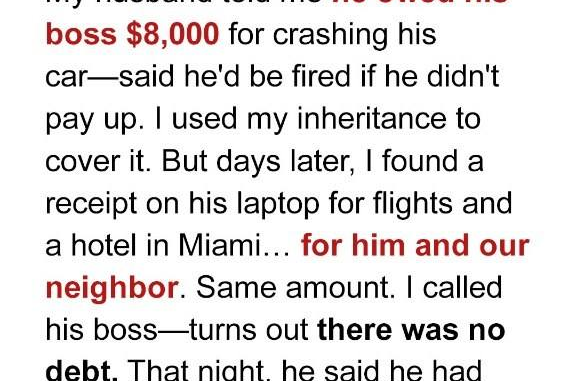
“I made a huge mistake,” he said, his voice carefully unsteady. “I damaged my boss’s car during lunch. The repairs are expensive. He says if I don’t repay him $8,000, I’ll lose my job.”
I didn’t question him. That same night, I transferred the money, thinking about how important his job was and feeling relieved that I could help. He kissed my forehead and told me I’d saved him. I believed every word.
A few days later, while using his laptop to print a document, I accidentally opened a folder that made my heart stop. It was titled Tickets_Miami. Inside were flight confirmations, hotel bookings, and a detailed eight-day travel plan. The total cost was $7,983—almost the exact amount he claimed he needed. The names listed were Mike and Sarah.
My stomach dropped. I stared at the screen, rereading it again and again, hoping I was misunderstanding something. Sarah worked with him—someone I’d met briefly at a company dinner, always described as “just a colleague.”
The next morning, while Mike was in the shower, I called his boss, Jim. My voice shook as I spoke. “Hi, this is Mike’s wife. I just wanted to check—how’s everything after the car accident?”
There was a pause. Then Jim replied, confused, “What accident? My car’s fine.”
In that instant, everything fell apart. The story, the urgency, the fear—it had all been fabricated.
I didn’t confront Mike immediately. Instead, I waited. That weekend, I invited Sarah and her husband, Edward, over for dinner. I cooked Mike’s favorite lasagna, poured wine, smiled, and acted as though nothing was wrong. Midway through the meal, Edward laughed and casually said, “No kidding? Sarah’s heading to Miami next week with some old college friends.”
Silence filled the room. Mike froze. Sarah turned pale. My heart raced, but my voice stayed steady. I looked at Mike and said calmly, “I’ll be staying at Jenny’s tonight.” Then I stood up, cleared my plate, and walked out.
While he was away in Miami with his so-called “friend,” I met with a lawyer and filed for divorce. I didn’t message him. I blocked his number, closed our shared accounts, and had the bank restrict access. When he returned, I imagine he found an empty home—no wife, no money, and no one left to trust his lies.
In the months after, his life unraveled. He lost his job not long after, caught in a mix of poor performance, workplace gossip, and his damaged reputation. The truth eventually reached him.
I, on the other hand, rebuilt. I moved into a small apartment filled with sunlight and wide windows. I surrounded myself with books, plants, and the smell of fresh bread I taught myself to bake. I took up running again, returned to photography, and learned to enjoy my own company. I realized that peace isn’t about avoiding pain—it’s about refusing to let someone else define your value.
Now, when I look back, I understand something important: betrayal doesn’t mean you have to suffer forever. Walking away isn’t weakness—it’s self-respect. Mike eventually tried to contact me, full of apologies and remorse, but by then I had already healed. I didn’t need revenge or explanations. I just wanted my life back.
And at last, I had it.