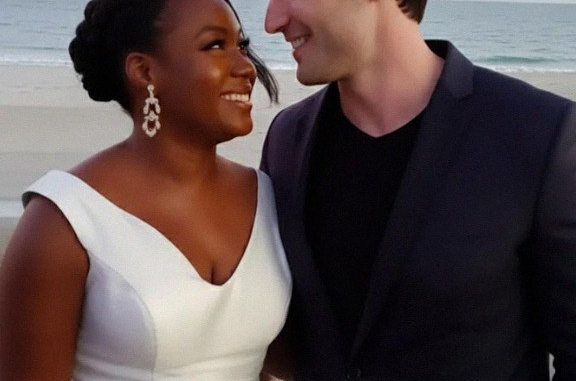
Tara married the boy who had made her high school years feel like a minefield—because he promised he’d changed. But on their wedding night, a quiet confession shattered the peace she thought she’d built. As old wounds resurfaced, Tara had to confront the cost of forgiveness—and whether love could exist without complete truth.
I wasn’t shaking.
That surprised me the most.
I sat in front of the mirror, steady-handed, pressing a cotton pad to my cheek to wipe away the blush that had smudged slightly from dancing. My dress hung loose where I’d unzipped it halfway, slipping off one shoulder. The bathroom smelled faintly of jasmine, extinguished tea lights, and my vanilla lotion.
I wasn’t trembling.
I was alone—but for the first time in a long while, I didn’t feel abandoned.
I felt suspended. Like time itself had paused just for me.
A soft knock came at the bedroom door.
“Tara?” Jess called softly. “You okay in there?”
“Yeah,” I said. “Just letting it sink in.”
I could picture her, my best friend since college, leaning against the frame, debating whether to come in.
“I’ll give you a few minutes,” she said. “Yell if you need help with the dress. I’ll be nearby.”
I smiled at my reflection, though it didn’t quite reach my eyes. Her footsteps faded down the hall.
The wedding had been beautiful. We’d held it in Jess’s backyard, under the old fig tree that had seen birthdays, heartbreaks, and one summer storm where we ate cake by candlelight during a blackout. It wasn’t fancy, but it felt real.
Jess wasn’t just my best friend. She had always been the one who knew the difference between my quiet contentment and quiet unraveling. She’d watched over me for years and never sugarcoated her thoughts, especially about Ryan.
“It’s my job to worry,” she’d said once. “Maybe he’s changed. Maybe he’s better. But I’ll be watching.”
Hosting the wedding had been her idea. She wanted it “warm and real,” but I knew the real reason: she wanted to stay close, close enough to see Ryan clearly if the past ever came back to haunt us. I was grateful for that.
Since our honeymoon was scheduled for later, we stayed in the guest room before heading home the next morning. It felt like a pause, a gentle space between celebration and reality.
Ryan had cried during our vows. So had I.
And yet I felt as if I were bracing for impact.
High school had trained me that way—always bracing before opening a door, hearing my name, or facing someone who could hurt me with a glance.
There had been no shoves. No bruises. Just a subtle, precise cruelty that hollowed me out from within. And Ryan had been the one wielding it.
He didn’t yell. He didn’t need to. A smirk, a false compliment, a nickname repeated enough to sting—those were his tools.
“Whispers.”
“That’s her,” he’d say. “Miss Whispers.”
He said it like it was charming. Like it belonged to me. People laughed, not knowing why. Sometimes I laughed too—pretending it didn’t hurt was easier than showing it did.
So when I saw him again at thirty-two, standing in line at a coffee shop, my body froze before my mind caught up.
Then he said my name.
“Tara?”
Every instinct screamed to keep walking. But I turned. He had two coffees—one black, one oat milk with honey.
“I thought it was you,” he said softly. “You look—”
“Older?” I interrupted.
“No,” he said quickly. “You look… yourself. More sure of who you are.”
That unsettled me more than I expected.
He apologized. Honestly. No excuses. No jokes. His voice trembled.
“I was cruel to you,” he said. “I think about it all the time. I’m sorry.”
I told him he had been awful.
“I know,” he said. “And I regret it.”
I didn’t forgive him that day—but I didn’t walk away either.
We kept running into each other. Coffee became conversation, conversation became dinners, and slowly, I stopped tensing around him.
He told me about therapy, sobriety, and volunteering with teenagers who reminded him of the boy he used to be.
“I’m not trying to impress you,” he said. “I just don’t want to be that person anymore.”
Jess was skeptical when she met him.
“You’re that Ryan?” she asked flatly.
“Yes,” he said. “And she doesn’t owe me anything.”
Later, Jess pulled me aside.
“You are not his redemption arc,” she warned. “Promise me you’ll walk away if you see even a trace of the old him.”
“I will,” I said. “But I’m allowed to hope.”
A year and a half later, he proposed. No grand gestures. Just rain tapping the windshield, his hand tight around mine.
“I don’t deserve you,” he said. “But I want to earn whatever you’re willing to give.”
I said yes. Not because I forgot the past, but because I believed people could grow.
And now, here we were.
I stepped into the bedroom, my dress half-unzipped, cool air brushing my skin. Ryan sat on the edge of the bed, sleeves rolled, collar undone, staring at the floor like it could give him answers.
“Ryan?” I asked softly. “Are you okay?”
When he looked up, it wasn’t nervousness or love I saw. It was relief.
“I need to tell you something,” he said.
My chest tightened. “Okay. What is it?”
“Do you remember the rumor senior year? The one that made you stop eating lunch in the cafeteria?”
I stiffened.
He described the day it began, how he’d seen another boy corner me, and how my face looked afterward.
After that, my voice had shrunk. I hid more. I whispered what happened to a counselor, and she promised to watch. But nothing changed.
Then the nickname spread.
Whispers.
Ryan admitted he’d started it—not to protect me, but to protect himself.
“I panicked,” he said. “I didn’t want to be next.”
Silence filled the room.
“That wasn’t deflection,” I said quietly. “That was betrayal.”
He told me he hated who he had been.
I asked why he waited until now.
“Because I thought loving you better might make up for it.”
Then he revealed the rest: he had written a memoir. It began as therapy, then a publisher accepted it.
“You wrote about me,” I said.
“I wrote about my guilt,” he said. “But I should have asked you first.”
That night, I slept in the guest room. Jess lay beside me, just like she had years ago.
“I’m not okay,” I told her. “But I’m clear.”
She squeezed my hand. “I’m proud of you.”
The hallway light spilled under the door, steady and quiet.
Silence isn’t empty. It remembers.
And in that silence, I finally heard my own voice—firm, whole, and done pretending.
Sometimes, being alone isn’t loneliness.
Sometimes, it’s freedom.