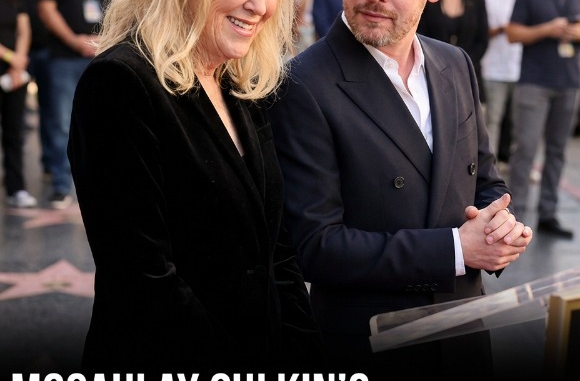
The death of Catherine O’Hara at 71 closes an extraordinary era in the world of entertainment. A performer of rare caliber and an Emmy-winning force, she helped shape the language of modern improvisational comedy. Few artists possessed her ability to move seamlessly between broad physical humor and deeply felt emotional truth. As new information surrounding her final moments comes to light, admirers across the globe are mourning a woman whose unforgettable creations—from the frantic yet tender Kate McCallister to the iconic Moira Rose—are forever etched into popular culture.
What is currently known about her passing suggests a sudden and deeply unexpected loss. While her representatives have honored the family’s request for privacy, they confirmed that O’Hara died following what was described as a “short illness.” In the pre-dawn hours of Friday, January 30, 2026, emergency responders were called to her Brentwood, California home at approximately 4:48 a.m. She was transported to a Los Angeles hospital in critical condition, where she passed away shortly thereafter. She is survived by her husband of more than three decades, production designer Bo Welch, and their two sons, Matthew and Luke.
The magnitude of this loss becomes clearer when considering the breadth of O’Hara’s influence. She was far more than an accomplished actress—she was a trailblazer. Rising to prominence in the 1970s with Toronto’s SCTV, she worked alongside comedic greats such as John Candy and Eugene Levy while redefining what women in comedy could be. Her performances were never superficial; she crafted characters with such depth and commitment that they felt unmistakably real, even at their most eccentric. Whether anchoring Tim Burton’s surreal Beetlejuice or skewering faded celebrity archetypes, she brought intelligence and discipline to every role.
Her performance in Home Alone made her a household name worldwide. As Kate McCallister, she grounded the film’s outrageous humor with genuine emotional urgency, transforming it into a story rooted in love and redemption. Years later, she achieved an almost unheard-of creative resurgence with Schitt’s Creek. Her portrayal of Moira Rose—equal parts theatrical, absurd, and strangely vulnerable—became a cultural phenomenon. The role earned her all four major acting awards in a single season, confirming her standing as one of the most formidable talents of her era.
Tributes from colleagues have been heartfelt and deeply emotional. One of the most poignant came from Macaulay Culkin, her on-screen son in Home Alone, who shared a message of personal grief on Instagram. “Mama. I thought we had time… I had so much more to say,” he wrote, capturing the collective sorrow felt by those who viewed O’Hara not only as a collaborator, but as a mentor and guiding presence within the industry.
What set O’Hara apart was her gift for humanizing the ridiculous. She uncovered vulnerability within extravagance and tenderness beneath satire. Her work with Christopher Guest on films such as Best in Show and A Mighty Wind showcased her extraordinary range, revealing characters layered with quiet longing and emotional authenticity. Fame was never her objective—truth was. She willingly obscured her own glamour with elaborate disguises and exaggerated mannerisms in service of storytelling.
Away from the spotlight, O’Hara lived with a humility that contrasted sharply with her flamboyant screen personas. Her marriage to Bo Welch was one of Hollywood’s most enduring partnerships, marked by discretion and mutual creative respect. Friends and colleagues consistently described her as demanding of excellence yet profoundly generous—an artist more interested in elevating others than claiming attention for herself.
As her five-decade career comes to a close, Catherine O’Hara leaves behind a legacy defined by integrity and fearless originality. She expanded the boundaries of comedy, proving that women could be complex, daring, eccentric, and emotionally rich all at once. From suburban chaos to small-town absurdity, her voice continues to resonate through the laughter she inspired.
The loss is immense: a singular comedian, a devoted mother, and a quiet revolutionary. While details of the illness that led to her death may remain private, the significance of her life’s work is undeniable and enduring. Catherine O’Hara gave audiences more than humor—she revealed the beauty, vulnerability, and oddness of being human. Her influence will continue to guide and inspire generations to come.