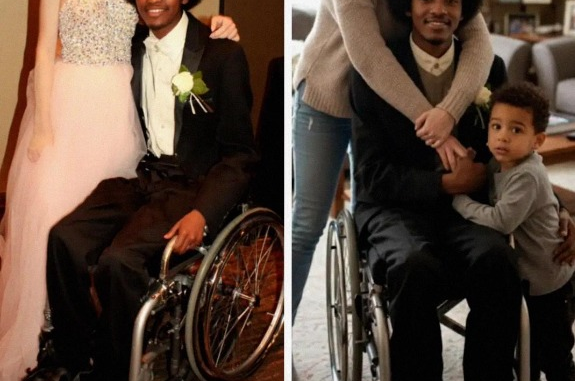
At seventeen, most people are busy worrying about dances, exams, and what comes after graduation. I was facing a decision that would determine the shape of my entire adult life. I was deeply in love with my high school boyfriend, Mark, and I believed our future was something we would build side by side. Then, just days before Christmas, everything collapsed.
I was sitting on my bedroom floor, surrounded by wrapping paper, when the phone rang. Mark’s mother was on the line, barely able to speak through her screams. There had been an accident. A truck. A hospital. He couldn’t feel his legs.
That night, I sat beneath harsh hospital lights while machines beeped around him. Mark lay immobilized, his body broken in ways no teenager should have to comprehend. The doctors were blunt: a severe spinal cord injury, permanent paralysis. The life we had imagined vanished in a single sentence.
When I returned home, shaken and hollow, my parents were waiting—not with comfort, but with strategy. They spoke calmly, clinically. I was seventeen, they reminded me. I had privilege, opportunity, a future they had carefully designed. Staying with Mark, they said, meant abandoning all of it.
They framed it as logic, as love for me. If I stayed, I would lose everything: financial support, college, family. They believed fear would make me walk away.
Instead, I packed a bag and left.
I moved into Mark’s modest childhood home and began a life defined by endurance. I gave up my dream school, worked exhausting jobs, and learned skills most adults never imagine needing—how to lift someone safely, manage medical care, battle insurance companies that treated my husband like a burden. We carved out happiness where we could. We went to prom together in our own way. We married simply, with borrowed chairs and no family on my side to witness it.
For fifteen years, I told myself our story was proof that love could overcome anything. Mark built a career working remotely. We had a son, who became the center of our world. I tried once to reach out to my parents when he was born, but their silence confirmed what I already knew: I had been cut off completely.
I didn’t regret my choice. I believed I had sacrificed everything for someone who deserved it.
Then one ordinary afternoon, I came home early—and heard a voice I hadn’t heard in fifteen years.
My mother was standing in our kitchen, furious and shaking, holding a stack of papers. Mark sat frozen in his wheelchair, pale and silent.
She told me to sit down. Then she showed me the truth.
The documents told a different story than the one I had lived by for half my life. The accident hadn’t happened where Mark claimed. There were messages—dated the same day—from my best friend at the time. Words of affection. Instructions to be careful. Evidence that Mark hadn’t been driving home innocently that night.
He had been leaving her.
The room seemed to collapse inward. When I asked him to deny it, he couldn’t. He admitted he had been young, selfish, afraid. He said he knew that if I believed he was blameless, I would stay. And if I knew the truth, I would leave.
So he lied.
And I built my entire life on that lie.
In that moment, every sacrifice I had made took on a new weight. I hadn’t chosen this life freely. I had been manipulated into it. My love hadn’t been honored—it had been used.
I told him to leave.
When he asked where he was supposed to go, I laughed—not kindly. I reminded him that I had been seventeen when I gave up everything for him, and somehow, I survived.
I packed for myself and my son. My parents, broken and remorseful, welcomed us into a home my child had never known. Seeing their grandson for the first time shattered whatever pride they had been holding onto.
The divorce was slow and painful. Mark argued that he had been a good partner after the accident. Maybe he had—but goodness built on deception is still a lie. Love without honesty isn’t devotion; it’s captivity.
Now, I am starting over. My life is smaller, but it’s real. I have work that reflects who I am, not who I had to become. My relationship with my parents is fragile, but healing. I don’t regret my ability to love deeply—but I regret giving it to someone who denied me the truth.
I’ve learned that love is powerful, but truth is essential. Without it, even the greatest devotion can become a cage.