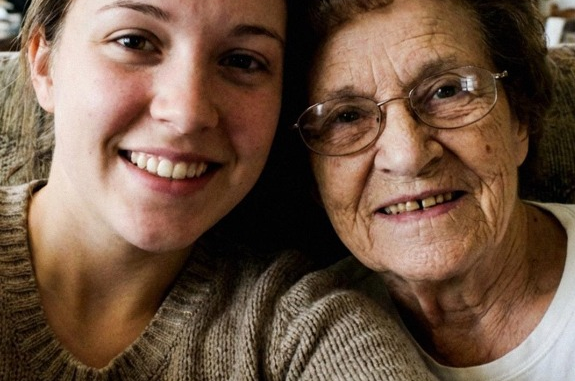
The morning of the funeral was gray and still, the kind of quiet that pressed down on everything. My name is Claire, and I live a simple, solitary life in a house with a crooked mailbox—a small imperfection I never bothered to fix. For three years, that mailbox had been my bridge to Mrs. Whitmore. It started when I noticed her mail piling up, unopened bills and catalogs forming a silent warning that no one was checking in on her.
When I finally knocked, an eighty-two-year-old woman answered, wrapped in a cardigan that seemed heavier than necessary. She looked embarrassed, pride wrestling with age. That night, we began sorting her mail—and, unknowingly, our shared loneliness.
I became her companion, her shadow, helping with prescriptions, groceries, and even perfecting her tea—four minutes, no more, no less. We spent hours on the porch sharing stories: she about her late husband and children, I quietly remembering my own lost daughter and husband. Mrs. Whitmore never pressed for more than I could give. Even Pumpkin, her ginger cat, nestled between us in silent companionship.
As close as we grew, I also noticed her children’s detachment. Two daughters and a son treated her home like a showroom, visiting rarely and with a cold, calculating energy. They argued about “when the time came,” measured walls for paint, and eyed her jewelry as though waiting for her weakness. After they left, Mrs. Whitmore would sit in heavy silence, and my heart ached for her.
Last month, the stillness became permanent. I handled the funeral, the flowers, the bakery cookies she loved. Her children arrived, dressed in expensive grief, more concerned with documents than the woman they mourned.
The next morning, a pounding on my door shattered my quiet. Two police officers and one of her daughters stood there, the daughter’s face twisted in outrage.
“Were you taking care of Mrs. Whitmore?” one officer asked.
Before I could answer, the daughter screamed, “She stole from us!”
My heart sank. They accused me of taking a diamond necklace, a family heirloom. I stepped aside as they searched. I had nothing to hide—I had spent three years giving to Mrs. Whitmore, not taking.
They rifled through my home, tossing cushions, opening closets. Then the lead officer reached into my purse—the one I had brought to the funeral—and pulled out a velvet pouch. Inside was the necklace.
“That’s not mine,” I whispered, knees weakening.
The daughter smirked. “Looks obvious to me. She took advantage of my mother.”
I was led away to the patrol car, neighbors watching, as the woman who had devoted herself to an elderly neighbor was treated like a criminal. In the interrogation room, under fluorescent lights, helplessness settled over me like a familiar shadow.
“The funeral home has cameras,” I said suddenly. “Check yesterday’s footage. You’ll see what really happened.”
The daughter scoffed. “It’s unnecessary. She found it in her bag. Case closed.”
The detective agreed to review the tape. An hour later, we watched as I stepped aside to greet a guest, leaving my purse on a chair. Moments later, the daughter reached into her coat and slipped something into my bag. The betrayal was clear.
“Care to explain?” the detective asked. Her face drained of color.
It turned out Mrs. Whitmore had changed her will two days before passing, leaving me a significant portion of her estate as thanks for companionship and care. Her children, furious, had tried to frame me to challenge the will.
“You took advantage of her!” the daughter spat as they led her away.
“I was her friend,” I replied steadily. “Something you never were.”
Walking out of the station, the world felt different. Kindness isn’t always met with gratitude; sometimes it provokes resentment from those who fail to show it. I returned to Mrs. Whitmore’s porch, Pumpkin curling against my leg, the sun dipping behind the trees.
That evening, I read a letter the estate lawyer had given me:
“Dear Claire, if you’re reading this, I’m gone. You gave me three years of companionship when I thought I would be alone. You never asked for anything, just showed up. This gift isn’t payment—it’s gratitude. Use it to build the life you deserve. Don’t let my children make you feel guilty. Thank you for seeing me. With all my love, Mrs. Whitmore.”
I folded the letter and tucked it into my pocket. Mrs. Whitmore had given me more than money—she had left me the unshakable certainty that showing up for someone, truly seeing them, is never wasted. I glanced at the leaning mailbox and decided not to fix it. It would remain as a reminder of how we began, and how, in the end, we both found our way home.