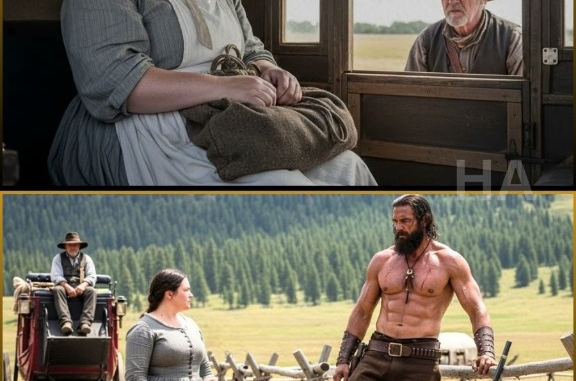
The move from Ohio’s gentle plains to the sharp, wind-bitten ridges of Colorado’s high country was not simply a change in scenery for Vera Whitlock—it was an act of self-preservation. In early 2026, as she knelt beside her father’s grave, she felt as though every stable part of her life had crumbled. Her brother Jonah had sold their family farm to settle his gambling debts, leaving her belongings in a flour sack on the porch like something unwanted. Vera had spent years being told she was too loud, too stubborn, too broad-shouldered for a world that preferred women to shrink themselves. Standing there in the cold earth, she made a quiet promise: she would never again beg for space in someone else’s life.
The “seeking wife” letter folded in her coat pocket was not a love story—it was a blunt proposal. It promised hardship, isolation, and no luxuries. It requested a woman strong enough for mountain life. To Vera, that letter wasn’t romance; it was opportunity. It was the last open door she could find.
The stagecoach journey into the Colorado mountains tested her resolve. The driver, Silas Ketter, studied her with the tired expression of a man who had transported too many hopeful brides up those trails, only to bring them back down in tears. He warned her about Ronan Blackwood—the man who had written the letter. A veteran of war, hardened and silent, Ronan was rumored to be distant and unwelcoming. Silas doubted she would last a week.
But Vera had not come searching for comfort. She was running from a life that had tried to make her smaller. As the air grew thinner and the scent of pine filled her lungs, she felt something steady inside herself. The mountain did not demand delicacy. It demanded endurance.
When the coach stopped in a clearing, Ronan stood waiting by a split-rail fence, rifle resting at his side. He was tall and solid, his beard streaked with ash-gray, his face marked by old battles. He regarded Vera in silence, assessing rather than greeting.
“You’re bigger than I expected,” he said plainly.
“And you’re ruder than I expected,” she replied without hesitation.
Something shifted in that exchange. Beneath his guarded stare, she sensed not cruelty but caution. Beneath her firm posture, he recognized resilience. He took her bag and led her into a cabin scented with smoke and leather, a place shaped by solitude.
Inside, the space felt deliberately singular. One chair at the table. One cup by the basin. It was a home built for no one but himself. Vera refused to remain an afterthought. She pulled a second stool to the table and stated simply that she would be sitting there for meals from now on.
Ronan outlined his expectations without warmth. She would cook and mend. He would hunt and protect. Other women, he admitted, had left quickly. He seemed to expect disappointment as a matter of routine. For him, the mountain was constant; people were not.
Days unfolded in steady rhythm. He chopped wood at dawn, his scarred back evidence of past violence. She learned to cook over high-altitude heat and filled the cabin with the sound of movement and voice it had long lacked. They clashed often—over food, over timing, over small habits—but each disagreement chipped at the walls between them.
Ronan hid behind silence, but Vera met it with persistence. When he showed her how to skin a rabbit, his large hands moved carefully, almost gently. His approval came in brief words—“Not bad”—but she recognized the respect in them.
The turning point came when he returned from a hunt injured, blood staining his sleeve. He insisted it was minor. Vera refused to accept that. She stood firm, tending to the wound despite his protests. In that quiet moment, something deeper shifted. The agreement they had made out of necessity began to transform into partnership.
By caring for his injury, Vera reached beyond the surface. She saw the man shaped by loss and isolation. Ronan, in turn, saw that her strength was not defiance but devotion. They were not flawless pieces that fit neatly together. They were weathered and imperfect, yet steady enough to brace one another against the harsh mountain winds.
Vera had come prepared to fight for survival. Instead, she found reflection. In Ronan’s solitude, she recognized her own. In his resilience, she found an equal. She realized that belonging was not about perfection, but about choosing to remain—day after day—at the same table, in the same quiet cabin, with someone willing to do the same.
As the sun sank behind the ridge and shadows stretched across the floor, Vera understood that the stagecoach would descend the mountain without her. She had found a place vast enough to hold all that she was.