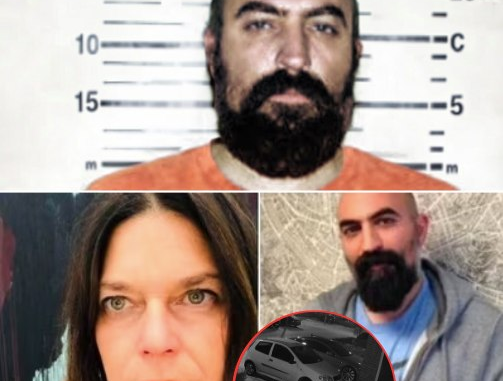
The disappearance of 84-year-old Nancy Guthrie has become a complex and high-profile case, drawing national attention and evolving far beyond its origins as a local missing person report. The investigation now involves both the Pima County Sheriff’s Department and the FBI, with a particular focus on Guthrie’s son-in-law, Tommaso Cioni. In the age of social media, news of Cioni’s recent interaction with law enforcement quickly sparked widespread speculation. Authorities confirmed that Cioni voluntarily participated in an extended, multi-hour interview to assist investigators. Sheriff Chris Nanos emphasized that Cioni was not under arrest, no charges have been filed, and his cooperation is a procedural step in piecing together the timeline of events.
On January 31, 2026, Nancy spent the evening with her daughter, Annie Guthrie, and Cioni. After dinner, Cioni drove Nancy home to the Catalina Foothills, a quiet, upscale neighborhood. He reported dropping her off around 9:45 p.m. and remaining outside until she entered her home safely. This marked the last confirmed sighting of Nancy by a family member. The following morning, when she failed to attend her usual church service and did not respond to calls, concern escalated.
Deputies arriving for a welfare check discovered evidence suggesting a violent and deliberate intrusion. A security camera monitoring the front door had been manually disconnected, creating a blind spot, and traces of blood on the porch were later confirmed through DNA testing to belong to Nancy. Forensic investigators also analyzed her pacemaker, which recorded an abnormal spike and cessation of normal activity around 2:00 a.m. on February 1—nearly four hours after Cioni last saw her—indicating the timeframe when she was likely confronted and removed from her home.
Cioni’s extended interview is part of standard investigative protocol, designed to rule out the “inner circle” of family members and confirm consistency with forensic evidence. Sheriff Nanos urged the public to avoid speculation, emphasizing that cooperation with authorities does not imply guilt.
Complicating matters, the Guthrie family faced opportunistic attempts to exploit the case online. Encrypted ransom demands in cryptocurrency targeted the family during their most vulnerable moments. Federal investigators arrested a suspect in California, though prosecutors confirmed the individual had no connection to Nancy’s disappearance and was acting as a “grief predator,” diverting resources from the active search.
Search efforts in the Arizona desert are ongoing, employing K-9 units trained in human scent detection, drones with infrared capabilities for nighttime monitoring, and a $50,000 reward offered by the FBI for information leading to Nancy’s safe return. The rugged desert terrain, combined with Nancy’s need for daily medication, has intensified the urgency of the operation.
Media coverage has both helped keep Nancy’s disappearance in the public eye and fueled speculative theories that risk interfering with the methodical pace of the investigation. Law enforcement continues to rely on forensic evidence—including DNA analysis and pacemaker data—while seeking any witnesses who may have seen unusual activity or vehicles in the Catalina Foothills between 10:00 p.m. Saturday and 4:00 a.m. Sunday.
As the case enters its third week, investigators are carefully reconciling physical and digital evidence with the statements provided by Cioni and other household members. The combination of advanced technology and traditional investigative techniques is central to locating Nancy Guthrie and bringing clarity to this tense and ongoing search.