For nearly forty years, I believed my life was orderly and predictable, shaped by my mother, Nancy, who prized appearances and taught me that a polished exterior meant success. At thirty-eight, I thought I had mastered this “straight line” life, focused on flowers, family, and routines, never questioning the gaps or shadows in my past. Secrets, I assumed, were harmless if buried deep enough.
Everything changed when my quiet neighbor, Mr. Whitmore, passed away. His funeral was modest, but the real shock came the next morning: a letter in my mailbox, written in elegant blue ink, addressed to me. It read: “If you’re reading this, I’m no longer here. This is something I’ve been hiding for forty years. In my yard, under the old apple tree, a secret is buried. You have the right to know the truth, Tanya. Don’t tell anyone.”
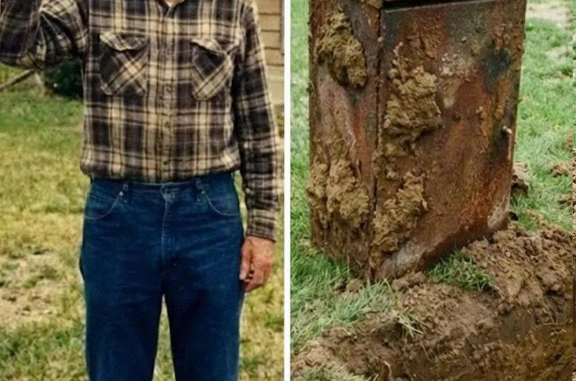
Compelled, I went to his backyard the next morning, shovel in hand. Beneath the apple tree, I uncovered a rusted metal box. Inside were photographs, a tiny hospital bracelet, and a letter addressed to me. It revealed the truth: Mr. Whitmore—the quiet, helpful neighbor I had known all my life—was my father. My mother’s family had forced him away when I was born, but he had stayed nearby for decades, silently watching me grow.
The revelation shattered the carefully constructed life I had known. When my mother learned the truth, she admitted her actions were meant to “protect” me, though I realized she had only protected herself. For the first time, I allowed myself to feel anger, grief, and the loss of a relationship stolen before it began.
Visiting Mr. Whitmore’s grave, I felt both mourning and gratitude—mourning the father I barely knew, and gratitude for his quiet, enduring love from the shadows. The secret under the apple tree was finally unearthed, and with it, my life’s “straight lines” gave way to the messy, painful, and beautiful curves of truth. I finally understood where I came from, and for the first time, the reflection I saw in the mirror was truly me.