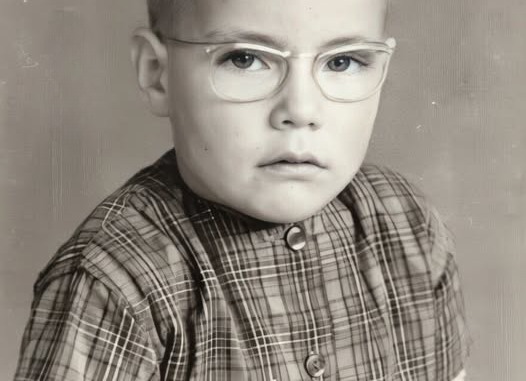
The silver screen often presents action stars as if they were born powerful—figures of pure strength and confidence. But behind one of cinema’s most iconic martial arts legends lies a very different beginning: a fragile, quiet boy whose journey started not in a gym, but in ballet shoes.
As a child, he was small, sensitive, and often overlooked. While other boys gravitated toward rough games and physical dominance, he remained on the sidelines, more comfortable observing than competing. This isolation turned him into a keen observer of movement and behavior, unknowingly laying the foundation for his future mastery of physical expression.
At home, his father struggled to understand him, pushing him toward toughness and traditional masculinity. Seeing his son’s delicate build as a weakness, he hoped discipline would make him stronger. This tension between expectation and identity quietly shaped the boy’s early life.
At around ten years old, he was enrolled in ballet. What began as an attempt to improve posture and discipline became something transformative. In the studio, he discovered structure, control, and precision. Ballet wasn’t softness—it was endurance, balance, and intense physical discipline. He learned how to control his body in ways few others could.
Despite his growing skill, he still faced teasing and doubt from others, and even his father’s approval remained distant. While he had developed grace and control, he still lacked the ability to defend himself. That gap eventually led him to martial arts, where he began training in karate and kickboxing.
At first, his movement was unusually fluid compared to traditional fighters. But instead of abandoning his dance background, he fused it with combat training. His flexibility, balance, and precision gave him an edge that others didn’t have. His kicks were higher, his timing sharper, and his movement almost artistic in its execution. Fighting became choreography—power blended with elegance.
This unique style eventually caught attention beyond the dojo. When he entered the film world, he didn’t hide his past in dance; he used it. His action scenes carried a rare visual rhythm that set him apart, turning him into a global icon of martial arts cinema. He wasn’t just portraying strength—he was redefining how it could look.
The boy once seen as weak had become a symbol of power and discipline. But his greatest achievement was not fame—it was transformation. He proved that strength doesn’t come from rejecting who you are, but from combining every part of yourself into something greater.
In the end, his journey reshaped more than his own life. It redefined what it means to be strong: not rigid or one-dimensional, but adaptable, disciplined, and uniquely individual.