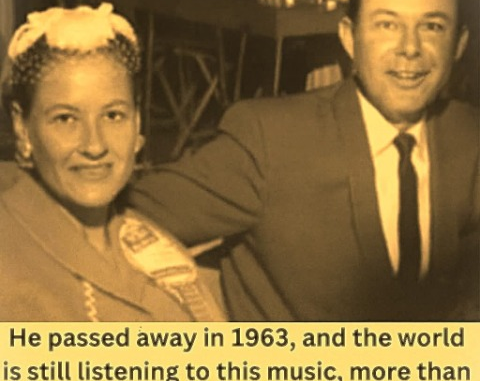
In 1960, a single recording quietly changed the course of country music while also reaching listeners well beyond its usual audience. Jim Reeves’ “He’ll Have to Go” emerged during a period of transition in the genre, standing apart with its gentle vocals, sparse arrangement, and emotional directness. It offered a more polished, intimate style that still felt deeply personal, making it suitable for mainstream radio as well as country stations.
The song’s inspiration came from an everyday moment. Writers Joe Allison and Audrey Allison were moved by overhearing a man speaking softly on the phone, trying to connect with someone he loved. That simple interaction became the foundation of the lyrics, centered on longing, separation, and the desire to reconnect. Rather than relying on complex storytelling, the song uses simplicity to let emotion take center stage.
On the production side, Chet Atkins played a key role in shaping the track’s sound through what became known as the “Nashville Sound.” This style introduced smooth arrangements and restrained instrumentation, moving away from the rougher, more traditional country style of earlier years. The result was a cleaner, more accessible sound that helped expand the genre’s appeal.
The response was swift and significant. “He’ll Have to Go” reached the top of the country charts and also crossed over into pop success, signaling a major shift in how country music could be recorded and received. Its lasting influence demonstrates how simplicity, emotional honesty, and careful production can create enduring music—showing that subtle songs can have the most powerful impact.