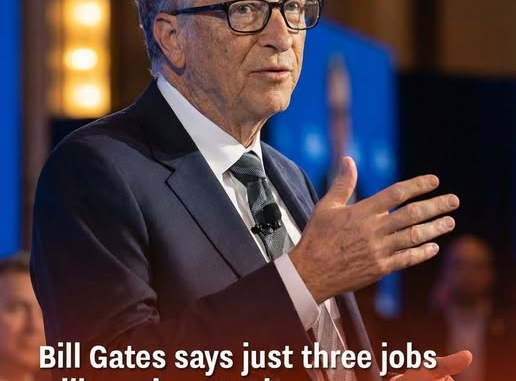
As artificial intelligence continues to reshape industries, a more important question than which jobs might disappear is which skills will remain valuable. Bill Gates has offered a practical view on this shift: AI will change how work is done, but it will not remove the need for human input. Rather than full replacement, the future is about changing roles and how people contribute.
To stay relevant, it helps to understand both the strengths and limits of AI. It is highly effective at processing large amounts of data, recognizing patterns, and working at speed. However, it still relies on humans for direction, context, and ethical decision-making. As a result, people who can combine technical awareness with judgment and problem-solving will continue to be in demand. Those who use AI as a supportive tool, rather than viewing it as competition, are likely to adapt more successfully.
Gates has highlighted several areas that are expected to remain important. Software development is one, since AI systems still require human guidance to be created and improved. Scientific research is another, where human insight and curiosity remain essential for interpretation and discovery. The energy sector also depends on complex, real-world decisions that involve responsibility and long-term planning beyond automation. These fields share a common trait: they rely on creativity, critical thinking, and accountability—qualities that are difficult to automate.
In the end, preparing for the future is less about choosing a “safe” job and more about developing flexible, transferable skills. Critical thinking, clear communication, and the ability to work alongside new technologies will matter across many industries. While the workplace is evolving, opportunity is not disappearing—it is shifting. Those who remain adaptable and curious are likely to become even more valuable in the AI era.