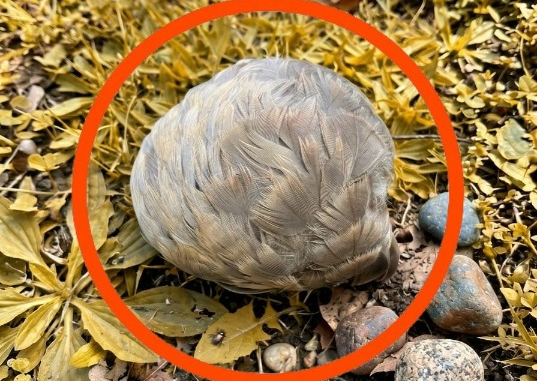
My son and I were walking beside the lake when we came across something unusual right under our feet. At first, it seemed almost intact—like a small bird lying still. But something about it felt strange. It was too motionless, too light, almost like an empty form rather than something living. When we looked closer, it was clear it wasn’t what we had first assumed.
There was nothing mysterious or unusual about it. It was the remains left behind after a predator had fed. Most likely a fox, a stray cat, or a bird of prey had already taken what it needed, leaving only a fragile cluster of feathers. The rest of the body was gone—no bones, no solid remains—just a hollow outline that still faintly resembled the bird it once was.
My son was initially uneasy. But after a moment, his reaction began to change. I explained that in nature, animals take what they need and leave behind what has no value to them. Feathers offer little nourishment, so they’re often all that remains. What had first seemed unsettling was actually just part of the natural cycle—quiet, practical, and unremarkable in its own way.
As we continued our walk, he kept glancing back, deep in thought. It became one of those simple but memorable moments that shifts perspective. Nature is neither purely gentle nor purely harsh—it simply is, constantly moving forward without explanation. And sometimes, even the smallest encounters carry the most meaningful lessons.