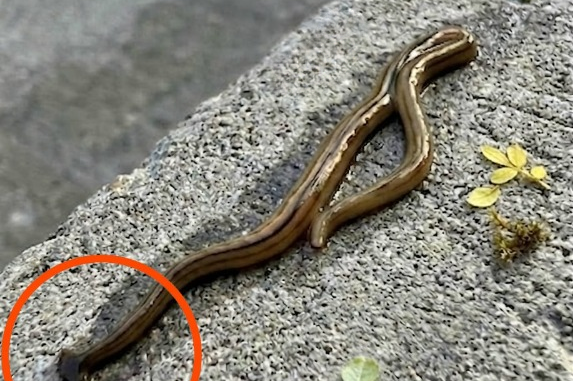
Stepping outside for some fresh air can sometimes lead to surprising discoveries. What initially seems like an odd or unfamiliar creature may actually be something quite noteworthy. In this instance, it was a hammerhead worm—a distinctive land flatworm recognized by its broad, flattened head and smooth, gliding motion.
Hammerhead worms are not just unusual in appearance; they are also predatory. Their diet mainly consists of earthworms and other small organisms living in the soil. Because earthworms are essential for maintaining healthy soil—helping with aeration and decomposition—the presence of these flatworms can disturb the natural balance within a garden or yard ecosystem.
Handling them is also something that requires caution. Specialists recommend avoiding direct contact, as these worms can release irritating toxins through their skin. They are also remarkably resilient, meaning that cutting them does not eliminate them and may even result in regeneration. For safe removal, it’s best to follow local environmental advice, which often includes careful collection and proper disposal.
What begins as an ordinary moment outdoors can quickly become a reminder of how intricate and unexpected nature can be. Even in familiar backyard spaces, complex ecological interactions are constantly at work—some helpful, others disruptive—all contributing to the delicate balance of the environment.