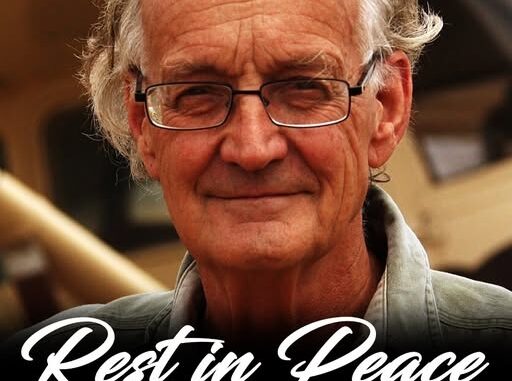
The conservation world is in profound grief after losing one of its greatest champions. While the passing of actors, musicians, or other celebrities often dominates headlines, few have shaped the survival of our planet’s wildlife as fundamentally as Iain Douglas-Hamilton. The pioneering zoologist and tireless advocate for elephants died at 83 in his Nairobi home, leaving behind a legacy that transformed how the world sees these majestic creatures—not as anonymous giants of the savannah, but as intelligent, social beings with deep emotional lives.
Douglas-Hamilton’s work redefined wildlife research. Before him, studies were largely statistical and impersonal; he brought empathy, observation, and recognition of individuality to the forefront. He demonstrated that elephants are capable of complex thought, deliberate decision-making, and profound grief. His groundbreaking approach allowed humanity to see their lives as rich tapestries of relationships, memory, and intricate social bonds.
Tributes poured in immediately. Prince William, who shared a personal connection with Douglas-Hamilton, described him as a man who devoted his life entirely to protecting elephants. Charles Mayhew, founder of Tusk, called him a true legend whose work will guide conservationists for generations.
Born in 1942 in Dorset, England, Douglas-Hamilton was educated in biology and zoology at Oxford, but the African wilderness became his classroom. At just 23, he began intensive studies in Tanzania’s Lake Manyara National Park, meticulously documenting elephants as individuals, recognizing them by ear notches, wrinkle patterns, and unique behaviors. His dedication to the “individual approach” revolutionized how conservationists and the public understand wildlife.
He also bore witness to the devastating effects of poaching. Douglas-Hamilton exposed the scale of the ivory crisis, risking his life in the field and providing critical evidence that led to the 1989 global ban on the international ivory trade—a decisive step in preventing a mass extermination of elephants.
Through Save the Elephants, which he founded in 1993, Douglas-Hamilton continued to innovate, pioneering GPS tracking and studying the complex decision-making and migrations of herds. He also became a global advocate, influencing international policies alongside leaders like Barack Obama and Xi Jinping, helping curb the ivory trade and protect elephant populations worldwide.
For Douglas-Hamilton, recognition was secondary. His goal was coexistence—a vision of humanity respecting and living in balance with the natural world. His courage, intellect, and relentless advocacy inspired colleagues, governments, and ordinary citizens alike, ensuring elephants could continue to roam safely across Africa.
Survived by his wife Oria, daughters Saba and Dudu, and six grandchildren, Douglas-Hamilton leaves behind a personal and planetary legacy. His work saved countless elephants, secured protected landscapes, and reshaped global conservation efforts.
Though the world is quieter without him, his influence endures in every protected herd and safe calf. Iain Douglas-Hamilton’s life reminds us that saving elephants is also about preserving our own humanity—a legacy that will echo across the savannah for generations.