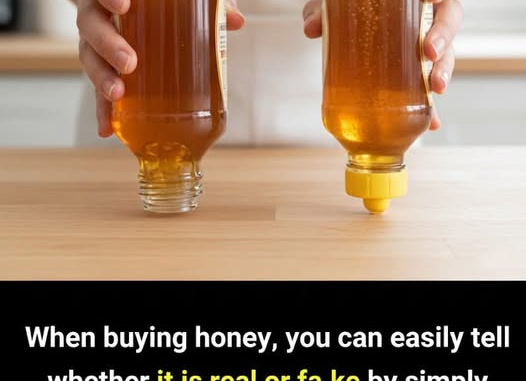
Buying natural foods often comes with an expectation of authenticity, and honey—often called “liquid gold”—is no exception. However, not every jar you see on the shelf is as pure as it seems. One popular trick suggests flipping the bottle upside down: if the honey moves slowly, it’s said to be real, while fast-moving honey is considered fake. It sounds simple, but this method is not dependable. In reality, honey is far more complex than such a quick test can reveal.
The reasoning behind this “flip test” is based on honey’s thickness. Pure honey is usually dense and slow to flow, but that consistency can change easily. Temperature has a major effect—warm conditions make honey thinner and faster-moving, while cooler temperatures make it thicker. Processing also matters: filtered or pasteurized honey often has a smoother, more fluid texture than raw varieties. Even the type of bottle and its opening can affect how quickly it pours, which makes visual judgment unreliable.
Because of these factors, quick home tests can be misleading. Some blended or artificial honey products are even designed to imitate the look and texture of real honey, making them hard to distinguish without proper testing. Slightly more informative signs include placing a drop on your thumb to see if it holds its shape or dropping it into water to observe how it settles and dissolves. While still not perfect, these methods can offer more insight than the bottle-flip idea alone.
Ultimately, the best way to ensure quality is not through shortcuts but through careful choices. Reading ingredient lists, avoiding added syrups, and buying from trusted or local producers are more reliable strategies. While simple tests may be interesting, understanding what you’re purchasing—and where it comes from—remains the most effective way to know if your honey is truly authentic.