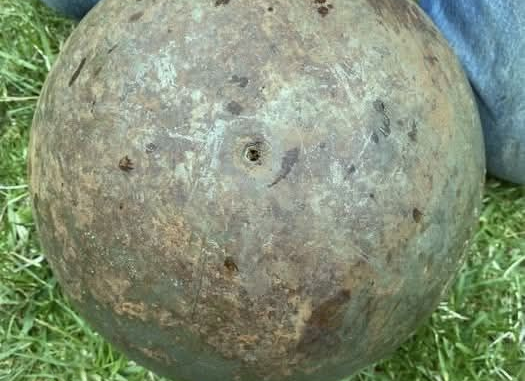
At first sight, a large steel ball may seem like a simple object, but it has a significant role in the history of industry and innovation. These heavy spheres were once vital parts of ball mill systems, where they helped crush raw materials such as ore into fine powder. This process supported the production of construction materials and industrial metals, contributing to large-scale manufacturing and economic growth.
Inside a ball mill, numerous steel balls would continuously tumble and collide as the machine rotated. With each impact, they broke down materials further, transforming coarse rock into usable fine particles. Although the process was intense and noisy, the balls themselves performed their work steadily, enduring repeated force while maintaining their shape and efficiency.
Their strength came from precise engineering. Crafted from hardened steel, they were built to resist heavy pressure, constant friction, and nonstop movement without quickly wearing out. Even though modern technologies have introduced more advanced grinding methods, the fundamental idea of using heavy media for material processing is still widely used in industry today.
More than just tools, these steel balls also symbolize the scale and power of earlier industrial systems. They reflect a time when enormous machines operated without pause to convert raw natural materials into the foundation of modern infrastructure—serving as quiet but powerful reminders of human ingenuity and industrial progress.