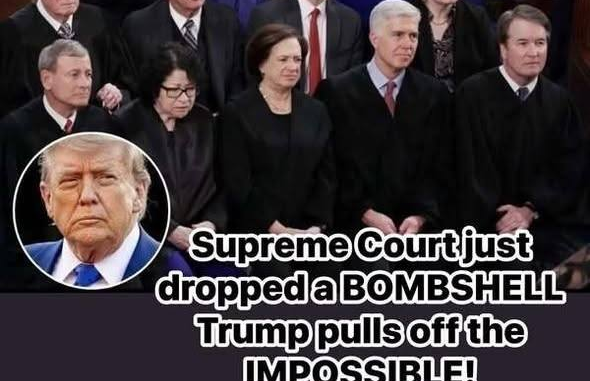
The Supreme Court of the United States handed a major victory to the immigration policies of Donald Trump by allowing U.S. Immigration and Customs Enforcement (ICE) to restart operations that had previously been blocked by lower courts. The decision removes an injunction that had limited ICE’s ability to carry out certain enforcement actions in Los Angeles, a city with a large undocumented population.
At the heart of the case was whether ICE agents could factor in elements such as race, language, or location when questioning individuals about their immigration status. Writing for the majority, Justice Brett M. Kavanaugh explained that while ethnicity alone cannot justify enforcement, it may be considered alongside other factors if it contributes to reasonable suspicion.
The Trump administration had challenged earlier rulings that restricted ICE’s authority. The Supreme Court’s decision is viewed as granting broader discretion to immigration officers, particularly in areas like Los Angeles that have been central to recent enforcement efforts.
Federal activity in the city had intensified in early June, leading to protests and public tension. In response, the government increased its presence, raising additional legal questions about executive power and the use of federal resources domestically—issues that are still being reviewed in the courts.
A key element of the dispute involved a ruling by Judge Maame Frimpong, who found that ICE had relied too heavily on factors like language or location when stopping individuals. She concluded that this did not meet the constitutional standard for reasonable suspicion under the Fourth Amendment and blocked certain enforcement practices.
The United States Court of Appeals for the Ninth Circuit had upheld that restriction, citing concerns about transparency. However, the Supreme Court’s reversal now restores greater operational flexibility for ICE, with the administration arguing that clearer authority is necessary for effective enforcement.