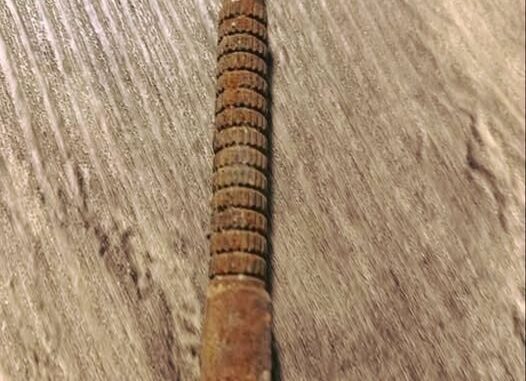
Among the wide variety of tools found in workshops, some of the most useful are also the most understated. While large power tools often take center stage, many small hand tools are essential for achieving precise, high-quality results. One excellent example is the nail punch, sometimes called a nail set—a straightforward tool that has long been valued by woodworkers, carpenters, and builders for its ability to create clean, professional finishes.
The nail punch is designed to drive a nail head just beneath the surface of wood or other materials without damaging the surrounding area. By placing its tip on the nail head and striking the opposite end with a hammer, users can recess the nail neatly below the surface. This makes it easy to conceal the fastener with wood filler, paint, or stain, resulting in a smoother and more polished appearance than can typically be achieved with a hammer alone.
Versions of this tool have been used for centuries. Early craftsmen relied on simple metal implements to secure materials while preserving the appearance of their work. As woodworking evolved and precision became increasingly important, specialized tools such as the nail punch were developed to improve accuracy and consistency. Over time, it became a standard tool for projects involving furniture construction, cabinetry, trim work, and other detailed applications.
Today’s nail punches are commonly made from hardened steel and other durable materials designed to withstand repeated use. Available in various sizes to fit different nail types, they remain a trusted tool in both professional workshops and home garages. Though small and often overlooked, the nail punch illustrates an enduring principle of craftsmanship: attention to detail and the right tool can significantly elevate the quality of the finished product.